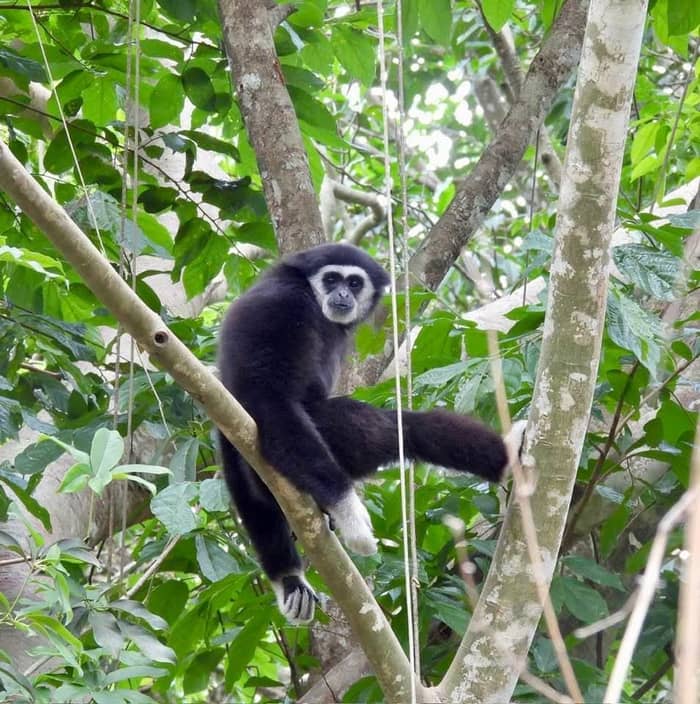
Longest walk
Gibbon trek day
Forest trail and village
- Day length7 hours
- GroupUp to 7 guests
- Pricefrom $75
Guides
Language
Currency
See availabilitystarting at $75 · free cancellationChecklist you can tick
Checklist · 11 tasks
Tap items to tick them off. This device remembers your progress.
0 / 11 ready
All set. Choose your date for the hills, and the rest is settled.
Book a seatThe cascade above Mae Kampong village: the hike from the lanes, its rocky steps, safe footing, the wetter months and the tours that stop there.
Editorial team, maekampongtour.top · Updated November 12, 2026 · Read in 7 min
Overview
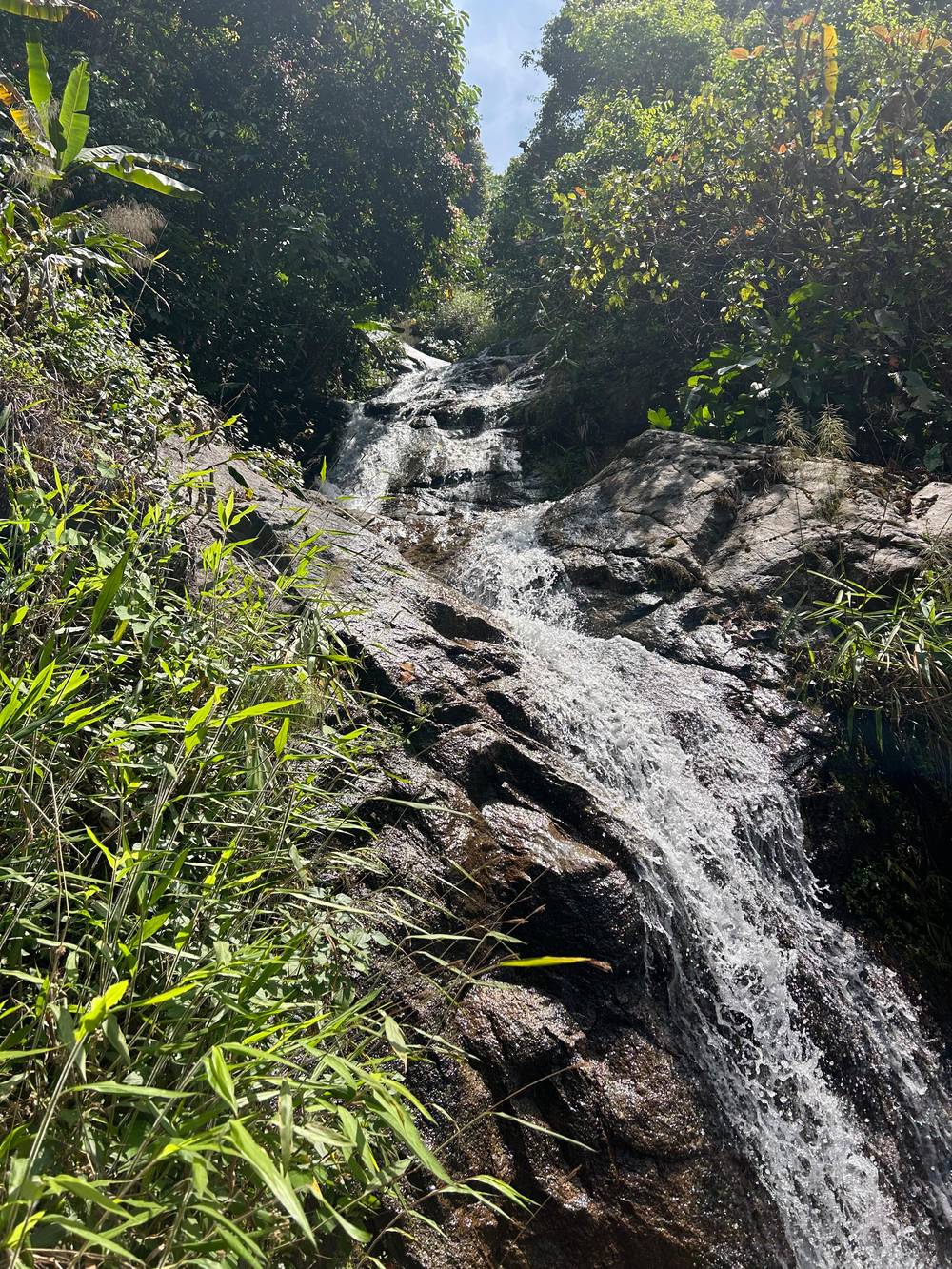
The Mae Kampong waterfall is the water feature that gives the village its stream. The MTCO describes a short hike to the cascade, which drops over 7 rocky steps, a stone staircase rather than a plunge.2,1 In Thai the name is Namtok Mae Kampong, namtok being the word for waterfall. On the village guide map it sits just south of the lanes, with the Rabiang View cafe north of it. Allow time for a first look from the foot of the cascade before you decide how far to climb.
The cascade is not a plunge. A private tour listing calls it a multi-level waterfall hidden in the forest, a place to relax and cool down, and the MTCO places it a short hike from the village.2 That wording fits a cascade you climb beside, level by level, rather than view from a fixed spot, and each level can feel quite different from the level below. Plan to see it from the bottom first, then decide with your guide how far the day, the weather and the group allow you to go.
The FAO case study of the village goes further and pictures a bubbling cascade tumbling down the mountainside on either side of the village, a sight that delights residents and visitors alike.3 The same stream feeds the village's hydroelectric power after a royal visit in 1983 suggested using the water that way.4,5 That makes the waterfall a working part of the community as well as a photo stop, and it deserves a careful, quiet visit.
Compared
| Waterfall | Shape | How you reach it |
|---|---|---|
| Mae Kampong | Cascades down 7 rocky steps.1 | A short hike from the village.2 |
| Montha Than | 3 levels in a peaceful setting.6 | On the way up Doi Suthep mountain.6 |
| Bua Thong | Multi-tiered limestone cascade.7 | A 90-minute drive from the city.7 |
Shapes and access as TAT and the Mekong Tourism Coordinating Office describe them; no fee is quoted here.
The distance is modest, but the time varies by tour. On the cooking class day the walk to the falls is a hike of 1.5 hours inside an 8-hour day that includes 1 hour in the van each way, and that listing calls the hike easy-going, around 1 to 2 km. The Giant Cafe day trip instead treats the falls as an optional stop of 30 minutes on the way up, after a van ride of 1.5 hours. A hike with a guide and a stop on the road are different experiences of the same cascade.
The site's own gibbon day follows a different trail. Its forest hike is 3 to 5 km, steep and uneven in places, and its highlights include a waterfall without giving the cascade a separate time slot. Do not confuse that long forest loop with the short climb to the cascade. If waterfalls are the reason you are going, ask the operator which of them the day includes and how much of the time budget is the falls.
A private day listing treats the waterfall as the middle of the morning, after Muang On Cave and before free time in the village. Another private day puts the village and its street food first, then lunch, then the hot springs and the umbrella centre, and its description adds the waterfall without a separate time. Whatever the order, count the walk to the cascade, the time at the pools and the walk back as a generous block of the morning.
How long the day runs
Day lengths from the listings; a waterfall is a block of the day, not all of it.
Wet stone is the main hazard. A trek listing warns that walking to all waterfall levels is not guaranteed because of safety and weather, so a guide may stop at a lower level after rain, and you should not push past the point where he or she turns around. The same listing's description mentions relaxing and swimming in natural pools at the Mae Kampong waterfall, so bring a swimsuit and a quick-dry towel if the day suits it.
Choose shoes with grip. A flat sandal on wet rock is the common mistake, and the hike is described as easy-going. Wet stone changes the picture, so take extra care after rain. Pack water, a dry pouch for your phone and a bag for damp clothes. Keep valuables in the van, and let the youngest or least steady members of the group decide the pace. If the stream looks brown or fast, skip the pool and enjoy the cascade from a dry rock.
Respect the water for the village's sake. The stream is also the village's hydroelectric source, as the FAO case study records,8 so the pools are not only scenery. Do not use soap or shampoo, do not leave bottles behind and keep to the marked paths. The cooperative that gathers tourism income funds tree planting and a buffer line against forest fires,9 and a clean waterfall is part of the same effort. Leaving nothing behind is the cheapest contribution you can make.
Pick your waterfall day
Tell us what the cascade is for and we will point to the day that fits.
If I want a proper hike to the water
The cooking class day
It schedules a hike of 1.5 hours to the falls and calls the walk easy-going.
If I only want a quick look and a coffee
The Giant Cafe day
The waterfall is an optional stop of 30 minutes on a van day.
If I want gibbons and a forest walk as well
The gibbon trek day
Its forest hike runs 3 to 5 km, steep and uneven in places.
If I want to swim if the water allows
The trek and food day
The listing mentions swimming but warns not all levels may be walked.
If I want the springs on the same day
The hot springs day
It continues to the hot springs and the Bo Sang craft centre.
Ways in
Longest walk
Forest trail and village
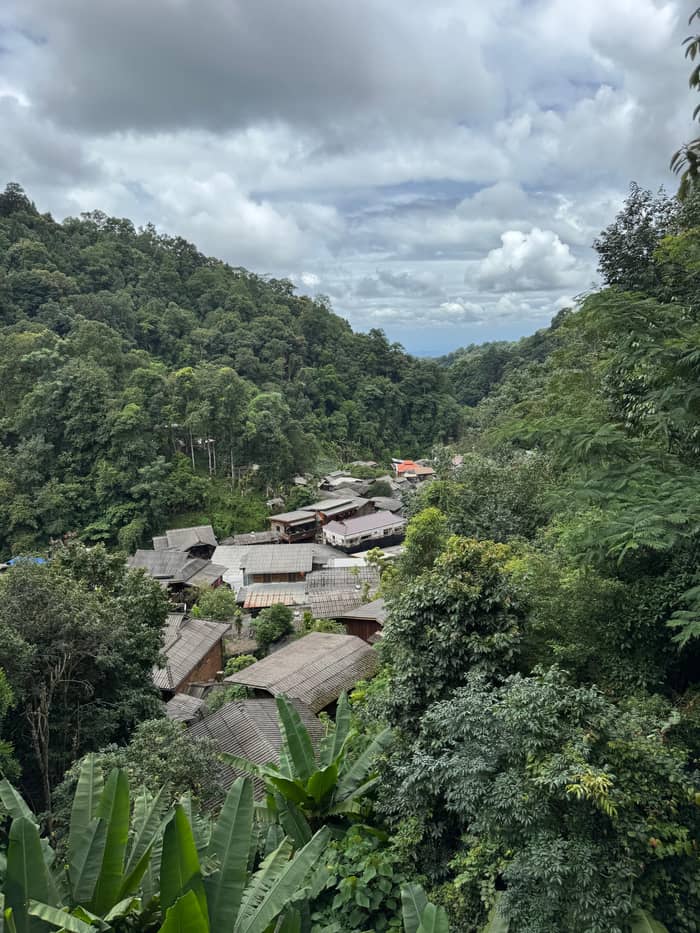
Easy stop
Van day with a view
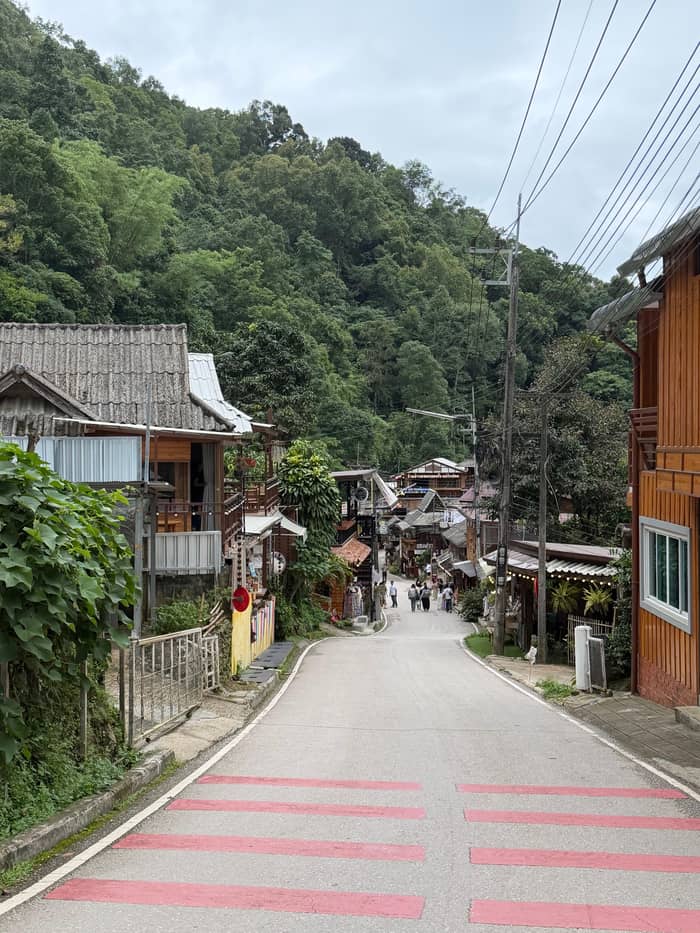
Longest at the falls
Hike, cook and eat
The cascade changes with the seasons. The site tour's own copy links the rainy months to the strongest flow in the falls. TAT's regional picture is a green season for the whole North, from mid-May to mid-October.12 Treat both as signals for the rainy half of the year, when the steps carry more water. Read both as a general season marker, not as a promise about the stream on a given day, because a morning after heavy rain can look very different from a dry-spell afternoon in the same month.
The Thai Meteorological Department gives the rain pattern for Upper Thailand. The TMD expects heavy rain in August, more than in the months before it,13 and its heaviest rain of the year in September across most of Thailand.14 Those months are likely to make the stream loudest, and also the footing most slippery. In October the TMD sees the season turning from rainy to winter, with less rain in Upper Thailand.15
In the cool season the falls are quieter. TAT sees comfortable conditions for walking, with lower temperature and humidity in the daytime.16 The compromise is simple: for a full, noisy cascade pick the green season and bring a rain jacket; for dry paths and clear views, go from November onward and accept a thinner flow. Whatever the month, an early start rewards you with a cool, quiet forest.
Price the day
Pick a group size and see what each tour that includes the Mae Kampong waterfall costs in total.
Compare 4 choices
Pick a group size and see what each tour that includes the Mae Kampong waterfall costs in total.
≈
View≈
View≈
View≈
ViewFrom-prices on GetYourGuide, shown at the ECB reference rate. Your exact price is confirmed during booking.
A waterfall morning
Setting out
The cooking class day starts with a van ride of 1 hour from Chiang Mai.
The climb
That day's hike to the waterfall lasts 1.5 hours.
At the cascade
The falls cascade down 7 rocky steps.1
Cooling off
Listings mention relaxing in the cool mountain air and swimming in natural pools.
Back in the village
Day tours follow the falls with a village stop or lunch.
Good Mae Kampong village photos start at the waterfall in the soft light of the morning, when the stone is wet and the forest is still shaded. A small tripod or a steady rock lets you use a slow shutter for silky water, and a polarizing filter on a camera cuts glare from wet leaves. Keep the lens cloth in a pocket, because spray reaches further than you expect on the lowest steps.
Drones are a separate matter. TAT's drone guide tells visitors that the aircraft and its pilot must be registered and authorised under Thai law before takeoff,10 and its requirements include insurance, which is compulsory, and an approval through the UAS Portal for every operation.17 Visitors should also check national park requirements and local restrictions before flying.18 A village that lives on quiet will not thank you for a buzzing aircraft over the lanes.
On the lanes and at the viewpoints, ask before you photograph people at work, and give a viewpoint cafe a coffee for the table you use. Courtesy matters when people are in the frame, and TAT's temple guide calls blocking someone's way for a shot rude.19 For a wide angle, the hill cafes add the long shot that the waterfall's closed forest cannot. Ask a village cafe owner about the best hour for light before you set up, and tuck a spare battery in a warm pocket on cool mornings, because cold drains it faster.
Video
Nat & Don Going Somewhere on YouTube · The video waits until you tap play to load.
a bubbling waterfall cascading down the mountainside on both sides of the village, providing villagers and visitors with a breathtaking view
TAT calls Chiang Mai known for its waterfalls and hot springs,20 and other cascades set Mae Kampong's in context. Montha Than Waterfall lies on the way up Doi Suthep mountain, has 3 levels and a peaceful setting.6 Bua Thong Sticky Waterfall, a multi-tiered cascade a 90-minute drive from Chiang Mai city, has limestone walls, ringed by forest plants, that are sticky enough to climb.7 Neither is in the Mae Kampong valley.
Mae Kampong's version is the cascade you reach on foot from a village, with a stream, a cafe and a hill road waiting behind you. The Montha Than cascade sits close to the city, and Bua Thong suits a day of its own. If time allows only a waterfall stop, base the choice on what you want to do around it: village lunch and coffee with Mae Kampong, a quick leg-stretch with Montha Than, or a climb with Bua Thong.
Waterfalls also pair well with the hot springs. A private listing pairs the Mae Kampong waterfall with the San Kamphaeng springs and the Bo Sang umbrella centre. The things-to-do page of this site lays out that combination day by day, so use it once you know the waterfall is on your list, and check that the umbrella centre is open on your day, since one listing says it closes on Tuesdays.
FAQ
Sources
Related reading
Planning the day to Mae Kampong? Ask a real person here.