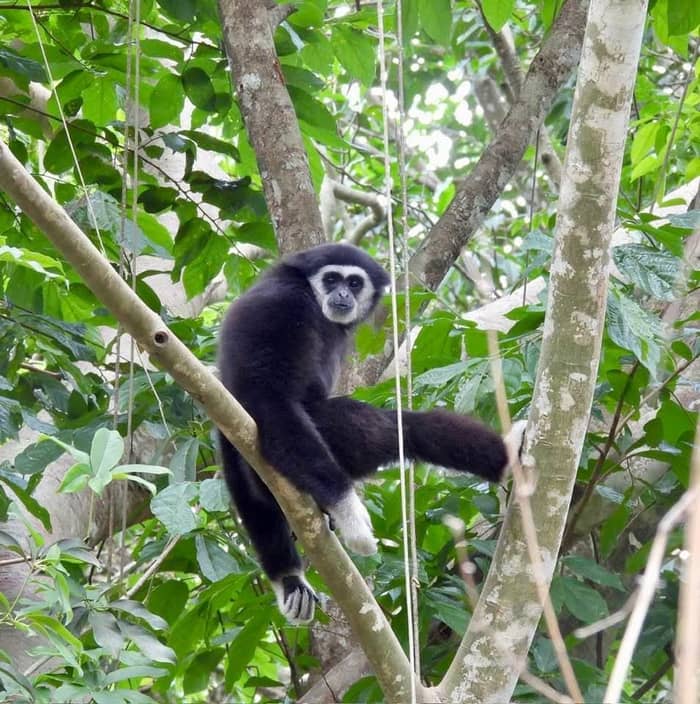
The draw
The gibbon area
A short hike with the caretaker
- Time14.30 listed
- GuaranteeNone
- SupportsThe caretakers
Guides
Language
Currency
See availabilitystarting at $75 · free cancellationSee your group's price
Fast answer
The Mae Kampong gibbon trek day lasts 7 hours with pickup in Chiang Mai: a short hike to released gibbons, a steep forest trail, a coffee stop and lunch, with sightings not guaranteed.
Day essentials
Compare 3 choices
Choose how many are traveling and see each shared day priced for your party.
≈
View≈
View≈
ViewFrom-prices on GetYourGuide, shown at the ECB reference rate. Your exact price is confirmed during booking.
What happens from the hotel pickup to the drop-off on the small-group trek, how hard the trail is, and what the newest reviewers say about it.
Editorial team, maekampongtour.top · Updated November 12, 2026 · Read in 6 min
Overview
The listing publishes a timetable, which gives the clearest picture of the day. The hotel pickup falls between 08.00 and 08.30, the group reaches the village at 09.40 and meets the local guide, and a coffee, tea or smoothie waits at a view cafe at 11.00. Lunch fills the hour from 13.00 to 14.00, the gibbon area is on the timetable for 14.30 and the van heads back to the city at 15.00.
Read together with the itinerary, the day divides into blocks. Laid out as blocks, that is 1 hour of driving out, 2 hours of guided village walking and hiking, 1 hour of break time in Mae Kampong and 1 hour of driving back. The listing makes a point of saying the order can change depending on when the caretaker picks up the sound of the animals, and the guides then adjust the plan to suit.
In practice that means the timetable is a frame rather than a contract. Do not plan a flight or a dinner reservation for the afternoon of the trek, and treat the pickup window as the only firm time of the day. A small group helps here, since the listing caps it at 7 participants and a party that size can move quickly when the plan shifts.
The stages
| Stage | Time | What to know | Effort |
|---|---|---|---|
| Pickup | 08.00 to 08.30 | Solo travelers may meet at a set point | None |
| Village and guide | 09.40 | Forest and culture walk | Easy |
| Coffee stop | 11.00 | Cafe with a view of the village | None |
| Forest trail | After the break | Steep, rough in places, 3-5 km | Hard |
| Lunch | 13.00 to 14.00 | Vegetarian and vegan options | None |
| Gibbon area | 14.30 | Not guaranteed; order may change | Short walk |
Times are the listing timetable; the caretaker may change the order.
The listing opens with a short hike to the area where gibbons released by a rehabilitation project now live. It adds that part of the price goes to the caretakers who feed and look after them, and that nothing is guaranteed, because the animals roam free. Expect a walk rather than a ride at this point, with the pace set by a caretaker who knows the area.
Reviews show how that works on the ground. Among the 10 newest English reviews, 6 describe seeing gibbons, one of them a gibbon family with a baby, and 1 praises the caretaker and the guides together. Two reviewers add that the money supports the caretakers and the gibbons, which matches the listing and the gist of the project.
Treat the sighting as a bonus and the animals as wild. Keep your voice down, keep your distance and do not offer food; the tourism board's general advice is to stay away from animals. The village keeps its own order too, and the cooperative behind it pays for tree planting and a firebreak, which is the wider effort the gibbons live inside.1 Our page on the gibbons themselves covers the animals and the viewing rules in more detail.
Where the hours go
Block lengths from the listing itinerary and timetable; the lunch hour overlaps the village time.
After the coffee break the group walks a forest trail that the description puts at around 3 km, through woodland little used by visitors, and the good-to-know lines warn of a steep trail with uneven ground here and there, between 3 and 5 km long. That range is a polite way of saying it is a real hike, not a stroll, and the second figure is the one to plan for.
On the way the guide points out a tree of around 900 years and explains edible plants, which the group tastes and smells. The FAO case study lists non-timber forest products and medicinal plants in the village forest, including edible mushrooms, leaves and cinnamon, so the plant lesson is rooted in what villagers collect.3
Reviewers agree it is a walk with a lot of information. One reviewer found the climb to the waterfall hot, and another says good walking shoes are a must on the slippery stretches. The Tourism Authority of Thailand says the cool months bring lower temperature and humidity for hiking in the North, an argument for booking between November and February if your dates are flexible.2
Will it suit you
Pick the answers that sound like you and see whether the day fits.
If I want a guaranteed gibbon sighting
Not this day
The listing says sightings are not guaranteed.
If I like to walk and ask questions
Yes, a good fit
The guides explain plants and the area, say 8 of 10 newest reviews.
If I want an easy stroll only
Try the gentler hike
The jungle hike with cooking is around 1 to 2 km.
If I travel with a vegetarian or vegan
Yes, lunch covers it
Vegetarian and vegan options are listed.
If I get car sick
Take tablets
The final stretch winds, and the booking advice mentions sickness tablets.
Three parts of the day
The draw
A short hike with the caretaker
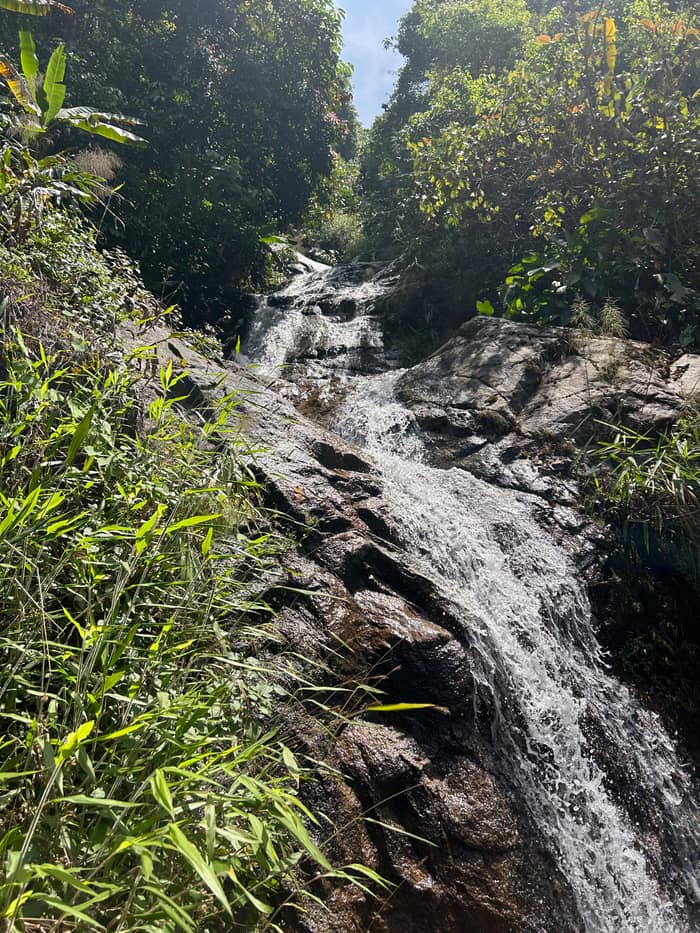
The effort
Steep, uneven, informative
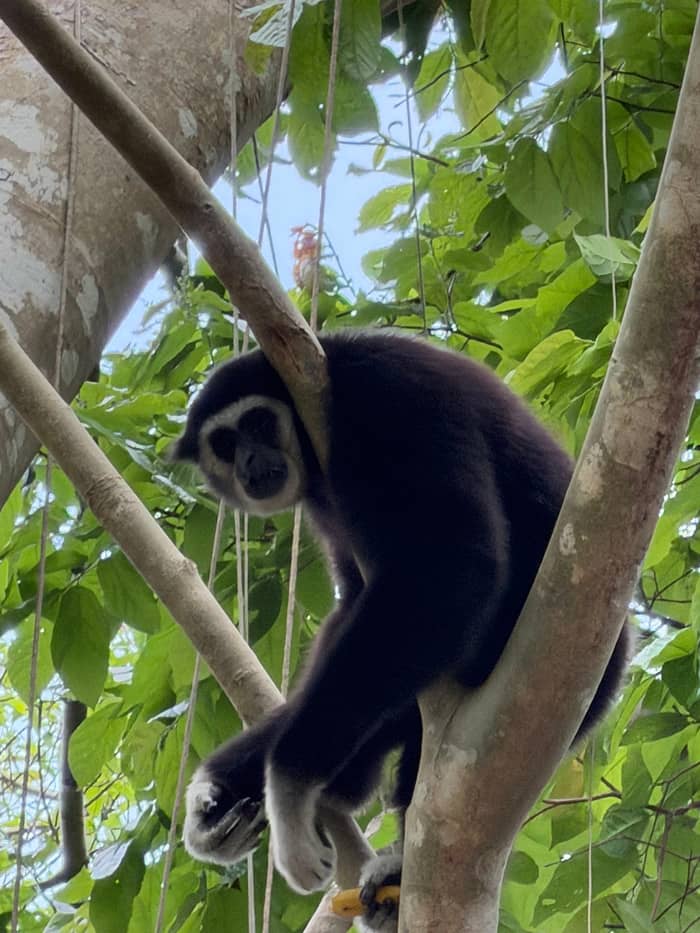
The rest
View cafe and local table
Food shapes the middle of the day: a coffee, tea or smoothie at a cafe with a view over the village at 11.00, then a seated lunch with vegetarian and vegan dishes. One reviewer traveling with a child who has allergies says the kitchen adapted, so name any dietary need when you book.
The coffee and tea are local products. The cup in your hand has a story: villagers grew coffee for a Royal Project, and the Teen Tok Royal Project still backs arabica and tea leaves as crops.4,5 The FAO paper adds that young tea leaves make tea while older leaves are fermented for miang, a chewing snack.6
Between the stops you walk the village itself. Shophouses of old timber sell Lanna food and souvenirs along the main road, high in the hills.7 The mountain location gives the village a cool climate all year round, so a thin jacket belongs in the daypack even when Chiang Mai is hot.8 A thin jacket and a bottle of water are the only accessories this part of the day needs.
Hour by hour
08.00 to 08.30
The van collects you in Chiang Mai.
09.40
The group arrives and starts exploring forest and culture.
11.00
A drink at a scenic cafe above the village.
13.00 to 14.00
A local restaurant, with vegetarian and vegan dishes.
14.30
The visit is listed for this time, subject to the caretaker.
15.00
The drop-off at your accommodation follows.
Our listing is open about the demands. Three things stand out in the listing: a trail that is uneven, a road with a winding finish and a promise to run in all weather. A reasonable fitness level and shoes with grip are the practical answers, and a family with a child is reported to have done it, with the child's allergy handled at lunch. A Mae Kampong village hike like this one rewards steady walkers more than fast ones.
Rain does not cancel the day, so decide in good time if a downpour would spoil it for you, since a full refund is available up to 24 hours before the start. In the dry, smoky weeks the advice is different: the national tourism board once cautioned about unhealthy air in parts of the North.9 Early decisions give you the widest choice of alternative dates.
Who should skip it? Anyone who cannot manage a steep, uneven walk of 3-5 km, anyone who dislikes winding roads and anyone who expects a guaranteed gibbon sighting. Those travelers might prefer the easier jungle hike of around 1 to 2 km listed with a cooking class, or a village visit by private car. Whichever you choose, tell the operator about any health limits before the day, because the ground is rough and sloping in places.
Video
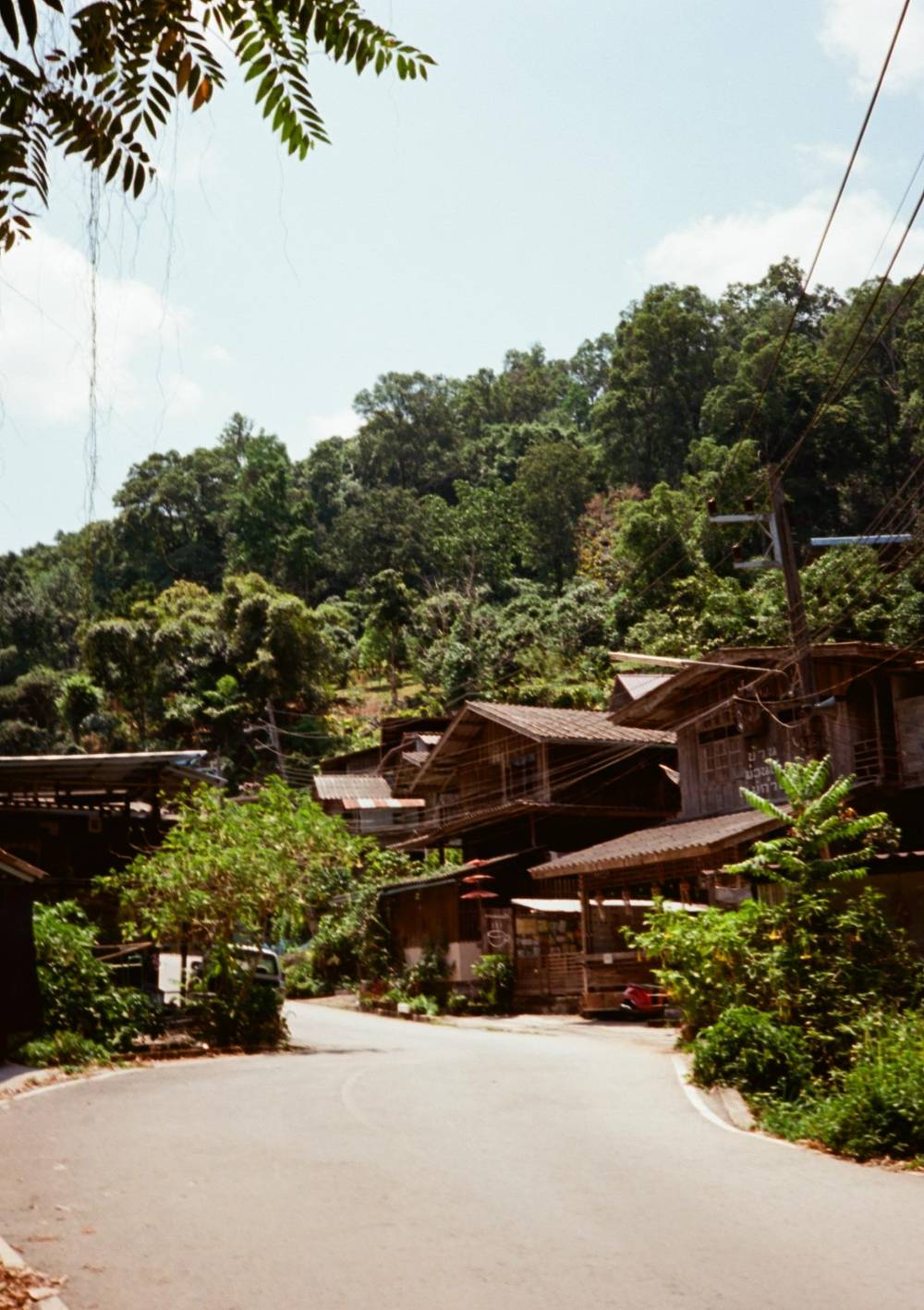
Angela Chang on YouTube · The video waits until you tap play to load.
The cooler months are also a good time for hiking and camping in Northern Thailand with the lower temperature and humidity providing a more comfortable climate for such activities during the day.
Pack for the trail
A total of 804 reviews average 4.9, with the guide scoring 5, transportation 5 and value 4.8. Of the 10 newest English reviews, all are 5 stars, 8 single out guides with deep knowledge of the plants and surroundings, and 1 calls the transport comfortable and spacious. The reviews also name the details that stuck: the gibbon family with a baby, the herbs and edible plants the guides handed round, and the lunch that suited a child with allergies.
Not every voice is glowing, and the warnings are useful. Two of the older reviews, from February 2024 and September 2025, say the price felt high for what the day includes, and value is the weakest of the sub-scores. If you are comparing, our price guide weighs it against the Giant Cafe day, which starts at $51, and the private options, so you can judge the gap for yourself.
What does the evidence add up to? A small-group day with a strong guide score, a hike that asks for effort and a gibbon sighting that is likely but never promised. A Mae Kampong trip is not for travelers who want a quick photo stop. It rewards the ones who like to walk, ask questions and taste what the guide hands them.
FAQ
Sources
Related reading
Planning the day to Mae Kampong? Ask a real person here.