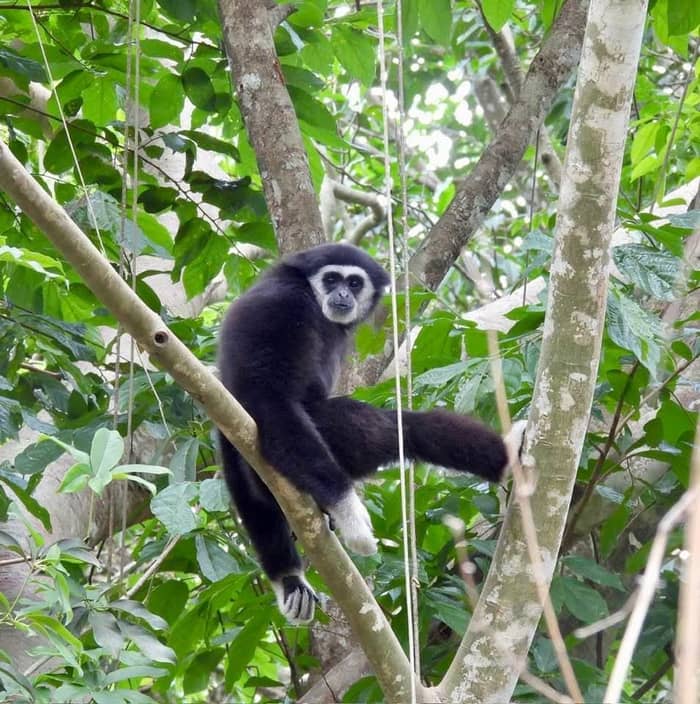
Quickest
The day tour
Small group, a day
- Length7 hours
- GroupUp to 7 guests
- Pricefrom $75
Guides
Language
Currency
See availabilitystarting at $75 · free cancellationChecklist you can tick
Gibbon trek day to Mae Kampong
★ 4.9 · 804 reviews total
Checklist · 8 tasks
Tap items to tick them off. This device remembers your progress.
0 / 8 ready
All set. Choose your date for the hills, and the rest is settled.
Book a seatWhat a gibbon visit near Mae Kampong really involves: where the animals came from, who feeds and protects them, why sightings are never promised and how to behave.
Editorial team, maekampongtour.top · Updated November 12, 2026 · Read in 7 min
Overview
A Mae Kampong gibbon tour visits animals that the operator describes in careful words. The site tour's description calls the gibbons wild and free to roam, living in a secluded area known to only a few, and says they were released as part of a rehabilitation project. The listing does not name the species, so this page does not either. What TAT says about the region is useful context: the Doi Chiang Dao biosphere reserve in Chiang Mai Province is home to rare, endangered or vulnerable species, including the Lar Gibbon.3
The wider hills east of the city also hold gibbons on paper. TAT's guide to the Lamphun area says Mae Takhrai National Park, which TAT locates about 60 kilometres northeast of the provincial seat, an hour by car, has macaques, gibbons, tigers and various birds among its wildlife.4,5 The park reaches into Lamphun and into the San Kamphaeng, Doi Saket and Mae On districts of Chiang Mai,6 and the FAO case study places Mae Kampong in Mae Orn District,7 so the village lies in the same hill country. That does not make the village's gibbons park animals, only neighbors of the same forest.
What you see among the Mae Kampong village gibbons therefore depends on a particular group of animals and the people who look after them. Gibbons are apes, not monkeys, and they move through the canopy by swinging from branch to branch rather than running along the ground. A group in a secluded forest is a quieter, less predictable sight than a staged one, and the quiet is part of the value.
Compared
| Option | Format | What is promised |
|---|---|---|
| Site gibbon tour | A day of 7 hours, small group of 7. | A chance to see released gibbons, no guarantee. |
| Karen homestay trek | 2 to 3 days, small group of 10. | Gibbon tracking, sightings cannot be guaranteed. |
| Mae Takhrai National Park | A national park northeast of the city.5 | Gibbons listed among its wildlife.4 |
| Doi Chiang Dao reserve | A biosphere reserve in the province.3 | The Lar Gibbon among its rare species.3 |
Tour facts from the listings; park and reserve facts from TAT. Parks are context, not tours sold on this site.
Rehabilitation has a specific meaning in Thailand, and TAT's description of a gibbon project in Phuket shows it. An NGO there works to rehabilitate white-handed gibbons so they can return to a jungle where they survive unaided.8 Most of its animals were captured young and became pets or tourist attractions before being abandoned by owners as the animals matured and became less docile.9 That is a different place and a different project from Mae Kampong, but it explains the vocabulary the listing uses.
The process is slow and costly. TAT says the rehabilitation process is long and expensive, and that many visitors sponsor a gibbon to help pay for it.10 A release is the end of that process, and the care need not end with it. The Mae Kampong listing says the gibbons live in a secluded area and that caretakers feed and protect them, which shows how that care continues after a release.
For a visitor the lesson is to read the wording carefully. Wild and free to roam means the gibbons choose where to be on the day. Released means someone had a hand in their past. Caretakers means someone has a role in their present. A good operator will tell you which of these applies to the animals you are about to see, and a good guide will answer follow-up questions without sales talk, so ask them and listen to the answer.
The day
Stops as the site tour's listing structures them; the wildlife stop is marked optional and sightings are never guaranteed.
The listing is direct about it. The site tour's description says the animals roam in the wild and no sighting can be promised, and that the day can be reordered when the caretaker picks up their calls. In practice that means the caretaker listens for calls and the guide rearranges the day around what the animals are doing. A flexible schedule is consistent with an operator that follows the animals.
The gibbon stop is also marked optional in the day's structured stops, with a wildlife viewing stop of 1 hour in the plan, and the description puts the visit to the gibbon area at 14:30 as a typical slot. Treat those as a plan, not a promise. A longer homestay trek that looks for gibbons over 2 to 3 days carries the same warning in its good-to-know list: gibbon sightings cannot be guaranteed, mornings start early and physical fitness is required.
So how should you judge a day that does not deliver a sighting? By the rest of the program. A forest trail of 3 to 5 km that is steep and uneven in places, a tree of around 900 years old, plants to taste and smell and a lunch with vegetarian and vegan options remain part of the day, all described in the same listing. If a gibbon sighting is your main reason for going, think twice, or choose a format that spends longer in the forest.
Pick your format
Tell us what you can spare in time and effort and we will point to a format.
If I have only a day and want pickup from the city
The day tour
It is a day of 7 hours with pickup included and a small group of up to 7.
If I want to wake up near the gibbons
The homestay trek
The highlights include waking to the sounds of gibbons near the homestay.
If I want to be sure the animals are cared for
Ask about the caretakers
Part of the day tour fare supports the people who feed and guard them.
If I worry about missing the sighting
Value the whole day
The forest trail, old tree and lunch continue even if the gibbons do not appear.
If I want a photo with an animal
Choose a wild sighting
TAT's partner campaign asks visitors not to pay for animal photo opportunities.2
Ways to meet gibbons
Quickest
Small group, a day
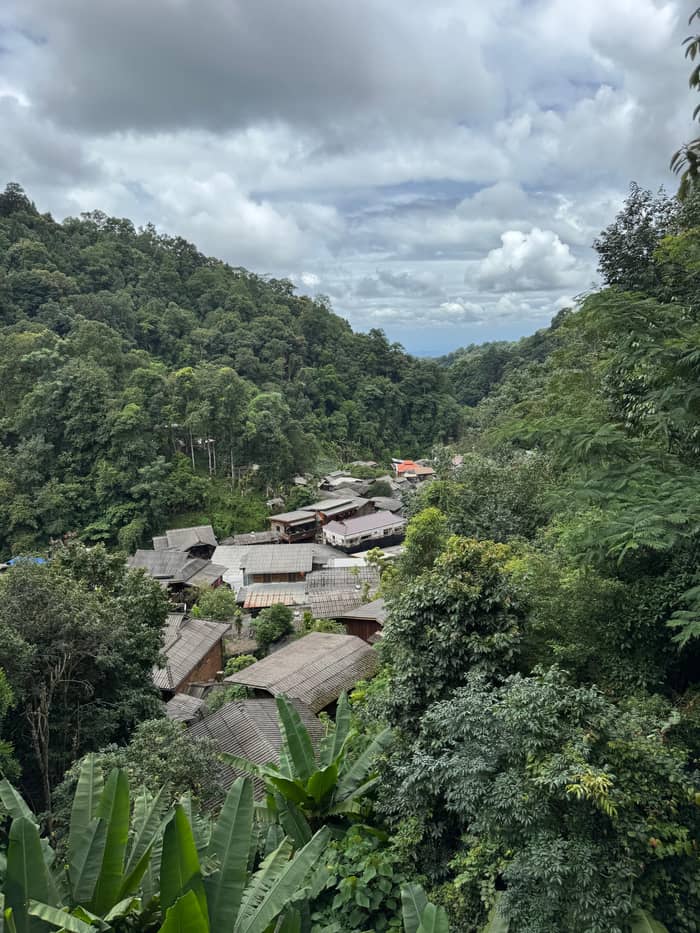
Longest
A Karen village stay
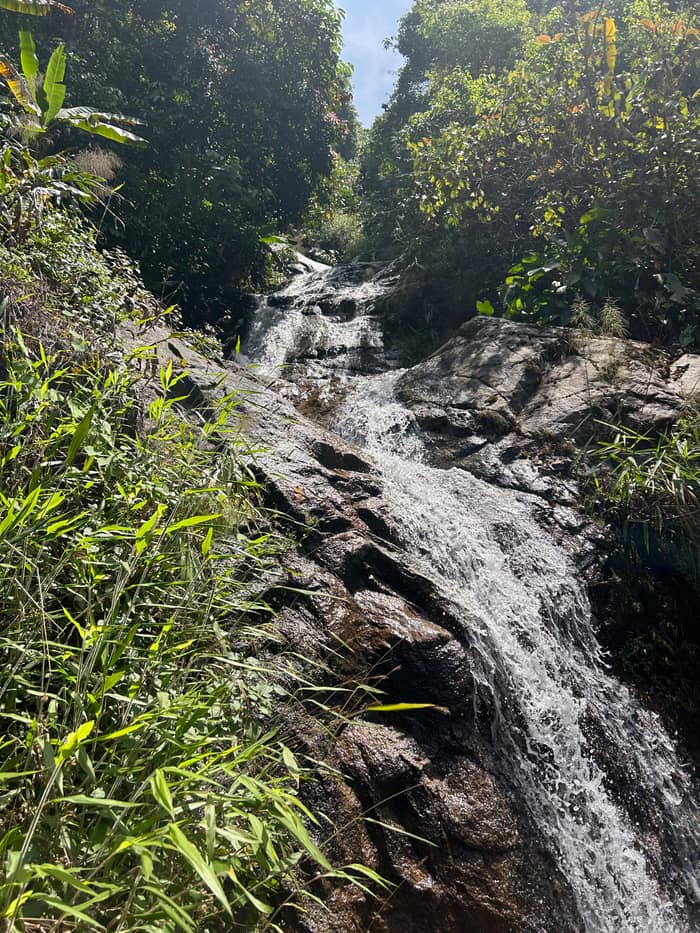
Context only
Reserve and park, no tour
Keep your distance, even when an animal appears curious. TAT's advice is to keep away from every animal, and to be careful whenever one is near.1 That is advice about disease and about behavior, and it applies to apes as much as to dogs and monkeys. TAT's rabies note says any warm-blooded animal, monkeys included, can get rabies.12 Our own advice on top of that: do not approach, touch or feed a gibbon, and do not offer food to any animal on the trail.
If something goes wrong, act quickly. A tourist who is bitten, scratched or licked by any animal is advised to get immediate medical treatment,13 and the Department of Disease Control advises flushing the wound for a minimum of five minutes (5 minutes) with soap and water.11 Tell your guide at once, and keep the wound clean until a doctor sees it. It costs nothing to know this advice before you walk into a forest.
Quiet is the other rule. Speak softly, move slowly and turn off camera flash; the listing gives no viewing rules of its own, so ask the guide for any that apply on the day. A listing for a private day near the village makes the same point about wild monkeys near a cave, asking guests not to feed or approach them. Respect the animals' space, and you will give the guide the best chance of keeping the sighting going for the rest of the group.
Cost
Pick a group size to compare the day tour and the multi-day homestay trek in total.
Compare 2 choices
Pick a group size to compare the day tour and the multi-day homestay trek in total.
≈
View≈
ViewFrom-prices on GetYourGuide, shown at the ECB reference rate. Your exact price is confirmed during booking.
The gibbon day
Early pickup
Pickup runs from 08:00 to 08:30 on the site tour.
Up the hill
The drive from Chiang Mai takes 1 hour and ends on a winding road.
Village arrival
The description lists arrival in the village at 09:40.
Gibbon area
The gibbon area comes at 14:30 on the schedule, though the order can change.
Back to the city
The return to the city is listed at 15:00.
Photography needs a policy. The Freeland foundation launched a No Photos Please campaign, which TAT reported, asking tourists not to pay for photos with animals that are mostly endangered, such as slow lorises and gibbons.2 A tour where you simply watch wild animals from a distance is not the same thing as a paid photo opportunity with an animal, and that is a distinction worth keeping in your head.
Take photos with care. Shoot from a distance with a long lens or your phone's zoom, keep your voice down and leave the flash off. Do not ask anyone to call animals closer for a better picture; the listing says the order of the day already shifts with when the caretaker hears the gibbons. If you disagree with something you see, say so politely to the operator after the tour. A responsible company will be glad to explain its practice.
There is no need to treat the visit as a test of conscience. Just pick the right operator, behave as a guest and accept the uncertainty. Wild is wild, and a day with an empty sky is part of the deal. The caretakers who feed and protect the animals are supported in part by the price you pay, so the best contribution is to arrive on time, listen to the guide and leave nothing behind.
Video
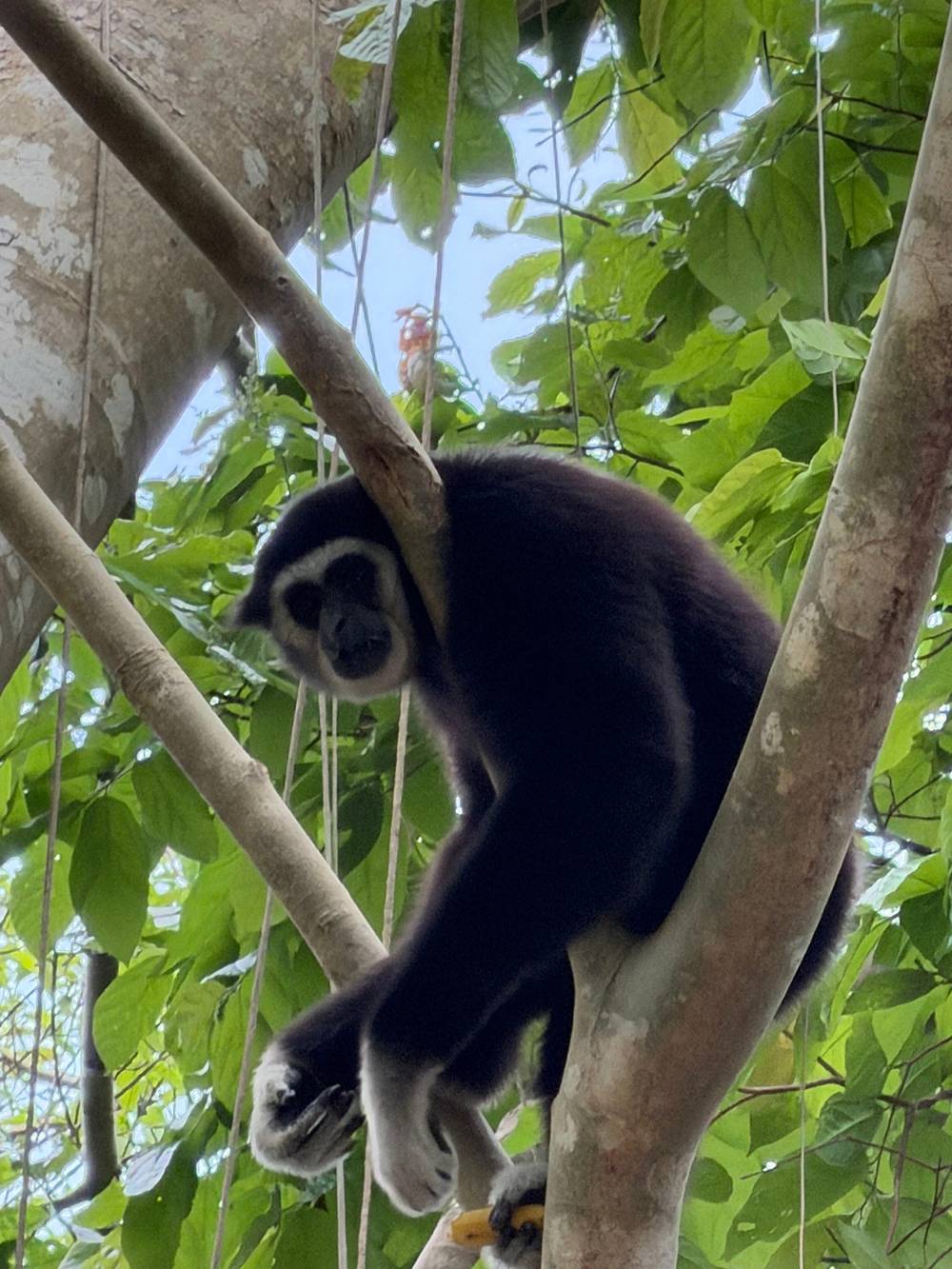
Connie Needham on YouTube · The video waits until you tap play to load.
refrain from paying for a photo opportunity with animals, most of which are of endangered species
The listings show different formats. The site tour caps the group at 7 participants, includes pickup and an English-speaking live guide, and fills a day of 7 hours, and the price starts from $75. A homestay trek in a Karen village takes up to 10 participants over 2 to 3 days, with early mornings and a cooking session with the host family, from $170. They differ in cost, time and expectation.
Ask where the money goes. The site tour's description says part of the fare supports the caretakers who feed and guard the gibbons. A Mae Kampong eco tour that involves animals should be able to say where the money goes, and this is a statement you can ask the operator to explain: how much, how often and what the caretakers do. Look for a specific answer; a fuzzy one suggests looking at other tours. The question is polite and fair, and it makes sure your money does the job it claims to do.
Finally, match the format to your fitness and patience. The forest trail is steep and uneven in places, so wear shoes with grip and carry water. A homestay trek requires physical fitness according to its listing. If you only have a day, choose the site tour; if you want mornings in a forest village, choose the homestay. Either way, go in with an open mind, a quiet voice and a camera that stays at a respectful distance.
FAQ
Sources
Related reading
Planning the day to Mae Kampong? Ask a real person here.